write a brief note on loud-Native & Serverless Architecture?
Cloud-Native & Serverless Architecture is a modern software development approach that uses Cloud Computing to build scalable, flexible, and efficient applications. Based on Cloud-Native Architecture, it focuses on designing systems that fully utilize cloud environments rather than relying on traditional infrastructure.
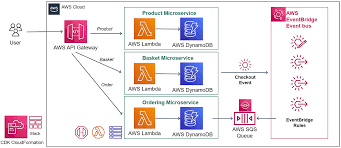
In this approach, applications are developed using Microservices, where each component operates independently and can be updated or scaled without affecting the entire system. These services are often deployed using Containerization, which ensures consistency across different platforms. Tools like Kubernetes are used to manage, scale, and orchestrate these containers effectively.
Serverless Architecture further enhances this model by removing the need to manage servers. Developers can focus only on writing code, while the cloud provider automatically handles deployment, scaling, and maintenance.
All these components work together within Distributed Systems, where multiple services communicate across networks to provide high availability and reliability. Overall, Cloud-Native & Serverless Architecture enables faster development, better scalability, and cost-efficient application management in modern computing environments.
What is coming age level on loud-Native & Serverless Architecture?
The coming age level of Cloud-Native & Serverless Architecture represents the future direction of software development, where systems become more automated, scalable, and intelligent through advanced use of Cloud Computing.
In this new era, Cloud-Native Architecture will continue to evolve with deeper adoption of Microservices, enabling highly modular and independently deployable applications. Combined with Containerization and orchestration tools like Kubernetes, organizations will achieve faster deployments, better resource utilization, and seamless scaling across global environments.
At the same time, Serverless Architecture will grow significantly, allowing developers to build applications without worrying about infrastructure. This will lead to increased productivity, reduced operational costs, and faster innovation cycles, making it ideal for startups and enterprises alike.
The future of Cloud-Native & Serverless Architecture will also rely heavily on advanced Distributed Systems, where applications are spread across multiple regions to ensure high availability, fault tolerance, and resilience. Integration with AI-driven automation and monitoring will further enhance system performance and reliability.
Overall, the coming age of Cloud-Native & Serverless Architecture will be defined by intelligent automation, global scalability, and simplified development processes, making it a cornerstone of next-generation digital solutions.
Advantages and Disadvantages of loud-Native & Serverless Architecture?
Here are the advantages and disadvantages of Cloud-Native & Serverless Architecture using your main and secondary keywords:
Advantages of Cloud-Native & Serverless Architecture
- High Scalability
With Cloud Computing, applications built on Cloud-Native Architecture can scale automatically based on demand. Serverless Architecture especially allows instant scaling without manual intervention. - Cost Efficiency
In Serverless Architecture, you only pay for actual usage instead of maintaining servers, which reduces infrastructure costs. - Faster Development & Deployment
Using Microservices, developers can build and deploy features independently, speeding up the development lifecycle. - Improved Flexibility & Portability
Containerization ensures that applications run consistently across environments, making them easy to move and deploy anywhere. - Efficient Management with Kubernetes
Kubernetes automates deployment, scaling, and management of containers, reducing operational complexity. - High Availability & Reliability
Built on Distributed Systems, applications can run across multiple servers and regions, ensuring minimal downtime. - Focus on Core Development
With Serverless Architecture, developers focus on writing code while the cloud provider manages infrastructure.
Disadvantages of Cloud-Native & Serverless Architecture
- 1 Complexity in Management
Managing Microservices and Distributed Systems can become complex, especially for large-scale applications. - Vendor Lock-in
Relying heavily on a specific Cloud Computing provider in Serverless Architecture can make it difficult to switch platforms. - Cold Start Issues
In Serverless Architecture, applications may experience delays (cold starts) when functions are triggered after inactivity. - Security Challenges
Distributed environments and multiple services increase the attack surface, making security more complex. - Debugging Difficulties
Tracking issues across Microservices and Distributed Systems can be challenging and time-consuming. - Learning Curve
Technologies like Kubernetes, Containerization, and cloud tools require specialized knowledge. - Performance Overhead
Communication between multiple Microservices in a Distributed System can sometimes introduce latency.
Conclusion
Cloud-Native & Serverless Architecture offers powerful benefits like scalability, cost savings, and faster innovation through Cloud-Native Architecture, Serverless Architecture, and tools like Kubernetes. However, it also introduces challenges such as complexity, security concerns, and dependency on cloud providers. Proper planning and skilled implementation are essential to maximize its advantages.
why we chose of loud-Native & Serverless Architecture for our career life field?
Choosing Cloud-Native & Serverless Architecture as a career field is a smart decision in today’s tech-driven world because it aligns with the future of Cloud Computing and modern software development.
One of the main reasons is high demand and career growth. Companies worldwide are rapidly adopting Cloud-Native Architecture to build scalable and flexible applications. Skills in Microservices, Containerization, and tools like Kubernetes are highly valued, opening doors to roles such as cloud engineer, DevOps engineer, and solutions architect.
Another key benefit is future-proof skills. Serverless Architecture is transforming how applications are built by removing infrastructure management. Learning this allows you to stay relevant as businesses move toward automation and simplified deployment models.
This field also offers hands-on innovation and flexibility. Working with Distributed Systems and cloud platforms gives you experience in building real-world, large-scale systems. You can work on global applications that require high availability and performance.
Additionally, there is strong financial potential. Professionals skilled in Cloud Computing, Kubernetes, and modern architectures are among the highest-paid in the IT industry due to their specialized expertise.
Finally, it provides global opportunities and remote work. Since cloud-based systems are used worldwide, you can work with international companies and teams from anywhere.
Conclusion
Choosing Cloud-Native & Serverless Architecture as a career helps you build in-demand, future-ready skills using Cloud-Native Architecture, Serverless Architecture, Microservices, Containerization, Kubernetes, and Distributed Systems, making it a powerful and rewarding career path in the modern IT industry.