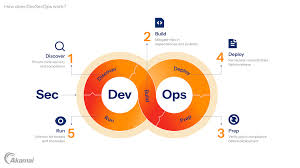

Write a brief note on DevSecOps & Cybersecurity Automation
DevSecOps & Cybersecurity Automation is a modern approach that integrates security practices directly into the software development and operations lifecycle. Unlike traditional models where security is added at the end, DevSecOps ensures that protection measures are embedded from the very beginning through Secure DevOps principles.
In a DevSecOps Pipeline, security checks such as code scanning, vulnerability assessment, and compliance verification are automated. This concept of Continuous Security helps teams detect and fix issues in real time, reducing risks and improving software quality. The idea of Shift Left Security plays a key role by introducing security early in the development phase rather than delaying it until deployment.
The approach also strengthens the Secure SDLC (Software Development Lifecycle) by integrating security into every stage—planning, coding, testing, and deployment. Through DevOps Security Integration, developers, operations teams, and security professionals collaborate closely, making security a shared responsibility rather than a separate function.
Finally, Security by Design ensures that applications are built with strong security foundations from the start, rather than relying on patches later. Overall, DevSecOps & Cybersecurity Automation enhances speed, efficiency, and protection, making it essential for modern software development environments.
Write Benefits and disadvantages on DevSecOps & Cybersecurity Automation
Benefits and Disadvantages of DevSecOps & Cybersecurity Automation
Benefits of DevSecOps & Cybersecurity Automation
- 1 Enhanced Security from the Start
By applying Shift Left Security, risks are identified early in development, reducing vulnerabilities before deployment. This strengthens the overall Secure SDLC (Software Development Lifecycle). - Continuous Monitoring and Protection
Continuous Security ensures real-time threat detection and automated security checks throughout the DevSecOps Pipeline, improving system resilience. - Faster Development with Security
Through Secure DevOps practices, teams can deliver applications quickly without compromising security, enabling faster time-to-market. - Improved Collaboration
DevOps Security Integration promotes teamwork between developers, operations, and security teams, making security a shared responsibility. - Automation Reduces Human Error
Automation in DevSecOps & Cybersecurity Automation minimizes manual mistakes and ensures consistent security checks across all stages. - Built-in Protection (Security by Design)
With Security by Design, applications are created with strong security foundations, reducing the need for costly fixes later.
Disadvantages of DevSecOps & Cybersecurity Automation
- Complex Implementation
Setting up a DevSecOps Pipeline with proper tools and processes can be challenging, especially for organizations new to DevSecOps. - High Initial Cost
Investment in automation tools, training, and infrastructure for Secure DevOps can be expensive at the beginning. - Skill Gap
Teams may lack expertise in DevOps Security Integration and advanced security practices, requiring additional training. - Tool Integration Issues
Integrating multiple security tools into the Secure SDLC (Software Development Lifecycle) can create compatibility and maintenance challenges. - Over-Reliance on Automation
While automation supports Continuous Security, it may miss complex or new threats that require human analysis. - Cultural Resistance
Adopting DevSecOps & Cybersecurity Automation requires a shift in mindset, and some teams may resist changes to traditional workflows.
Conclusion
DevSecOps & Cybersecurity Automation provides a powerful way to build secure and efficient systems by integrating security into every phase of development. While it offers strong advantages like automation, collaboration, and early threat detection, organizations must address challenges such as cost, complexity, and skill gaps to fully benefit from this approach.
What is career of DevSecOps & Cybersecurity Automation for our generation
Career Scope of DevSecOps & Cybersecurity Automation for Our Generation
DevSecOps & Cybersecurity Automation is one of the fastest-growing career fields in modern IT. As organizations increasingly depend on digital systems, the need for secure, automated, and reliable software development has become essential. This creates strong career opportunities for the current generation.
Why This Career is Important Today
With rising cyber threats, companies are shifting toward DevSecOps and Secure DevOps practices to protect their applications. Traditional security methods are no longer enough, so professionals who understand Continuous Security and automation are in high demand worldwide.
Career Opportunities in DevSecOps & Cybersecurity Automation
Students and professionals can explore various roles, such as:
- DevSecOps Engineer – Works on building secure systems within the DevSecOps Pipeline
- Cybersecurity Automation Engineer – Focuses on automating threat detection and response
- Security Analyst – Monitors systems using Continuous Security practices
- Cloud Security Engineer – Ensures security in cloud-based environments
- Application Security Engineer – Implements Shift Left Security in development
Key Skills Required
To build a successful career in DevSecOps & Cybersecurity Automation, you should learn:
- Secure SDLC (Software Development Lifecycle) concepts
- Tools for DevOps Security Integration (like CI/CD, container security, scanning tools)
- Programming and scripting (Python, Bash)
- Knowledge of cloud platforms and cybersecurity fundamentals
- Understanding of Security by Design principles
Future Growth and Demand
The future of DevSecOps & Cybersecurity Automation is very bright. As industries adopt automation and cloud technologies, the demand for professionals who can combine development, operations, and security will continue to grow. This field offers:
- High salary potential
- Global job opportunities
- Continuous learning and career advancement
Why Our Generation Should Choose This Field
Our generation is living in a digital era where security is critical. Choosing a career in DevSecOps & Cybersecurity Automation means:
- Working on advanced technologies
- Contributing to secure digital systems
- Staying relevant in a competitive job market
Conclusion
A career in DevSecOps & Cybersecurity Automation is a smart and future-proof choice. By mastering DevSecOps Pipeline, Shift Left Security, Secure SDLC (Software Development Lifecycle), and Security by Design, individuals can build a strong, rewarding, and impactful career in the tech industry.
Why we use of DevSecOps & Cybersecurity Automation in our working
Why We Use DevSecOps & Cybersecurity Automation in Our Work
DevSecOps & Cybersecurity Automation is used in modern workplaces to ensure that software is developed quickly, efficiently, and securely. As cyber threats increase and systems become more complex, integrating security into every stage of development has become essential.
1. To Build Security into Development (Shift Left Security)
Using Shift Left Security, teams introduce security measures early in the coding phase. This reduces vulnerabilities and avoids costly fixes later, making the Secure SDLC (Software Development Lifecycle) stronger and more reliable.
2. To Enable Continuous Protection (Continuous Security)
With Continuous Security, automated tools constantly scan code, applications, and infrastructure for threats. This ensures real-time protection throughout the DevSecOps Pipeline, rather than checking security only at the end.
3. To Improve Collaboration (DevOps Security Integration)
DevSecOps promotes DevOps Security Integration, where developers, operations, and security teams work together. This shared responsibility improves communication, reduces delays, and leads to more secure applications.
4. To Automate Security Processes (Secure DevOps)
In Secure DevOps, repetitive security tasks like vulnerability scanning, compliance checks, and testing are automated. This saves time, reduces human error, and increases efficiency in daily work.
5. To Ensure Secure Application Design (Security by Design)
By applying Security by Design, systems are built with security features from the beginning. This proactive approach helps prevent attacks instead of reacting to them later.
6. To Speed Up Delivery Without Compromising Security
The DevSecOps Pipeline allows teams to deliver software faster while maintaining high security standards. Automation ensures that security checks do not slow down development.
7. To Reduce Risks and Costs
Fixing security issues early in the Secure SDLC (Software Development Lifecycle) is much cheaper than resolving them after deployment. DevSecOps & Cybersecurity Automation helps organizations minimize financial and reputational risks.
Conclusion
We use DevSecOps & Cybersecurity Automation in our work to create secure, efficient, and reliable systems. By combining DevSecOps, Continuous Security, Shift Left Security, DevOps Security Integration, and Security by Design, organizations can protect their applications while maintaining speed and innovation in today’s digital environment.